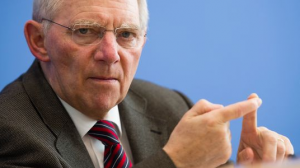
Se sabía que el héroe griego iba a ser humillado. Lo que no esperábamos era el ataque en gavilla que le tenían preparado. Según revela Timothy Geithner, exsecretario del Tesoro de los EUA en su libro Stress Test: Reflections on Financial Crises, desde 2011 ya tenía Schäuble un plan para sacar a Grecia de la Eurozona:
He [Schäuble] told me there were many in Europe who still thought kicking the Greeks out of the eurozone was a plausible—even desirable—strategy. The idea was that with Greece out, Germany would be more likely to provide the financial support the eurozone needed, because the German people would no longer perceive aid to Europe as a bailout for the Greeks. At the same time, a Grexit would be traumatic enough that it would help scare the rest of Europe into giving up more sovereignty to a stronger banking and fiscal union. The argument was that letting Greece burn would make it easier to build a stronger Europe with a more credible firewall.
El argumento le pareció aterrador a Geithner, en especial por el costo político que tendría para la confianza en la Unión Europea, dentro y fuera. Y, como se sabe, la confianza es fundamental en la economía de mercado. La confianza fue la carta que se jugó Dijsselbloem para empezar a azotar a Tsipras: “¿Se puede confiar en los griegos aun?”, fue la pregunta con la cual se posicionó el presidente del Eurogrupo.